
The estimated reading time for this post is 172 seconds
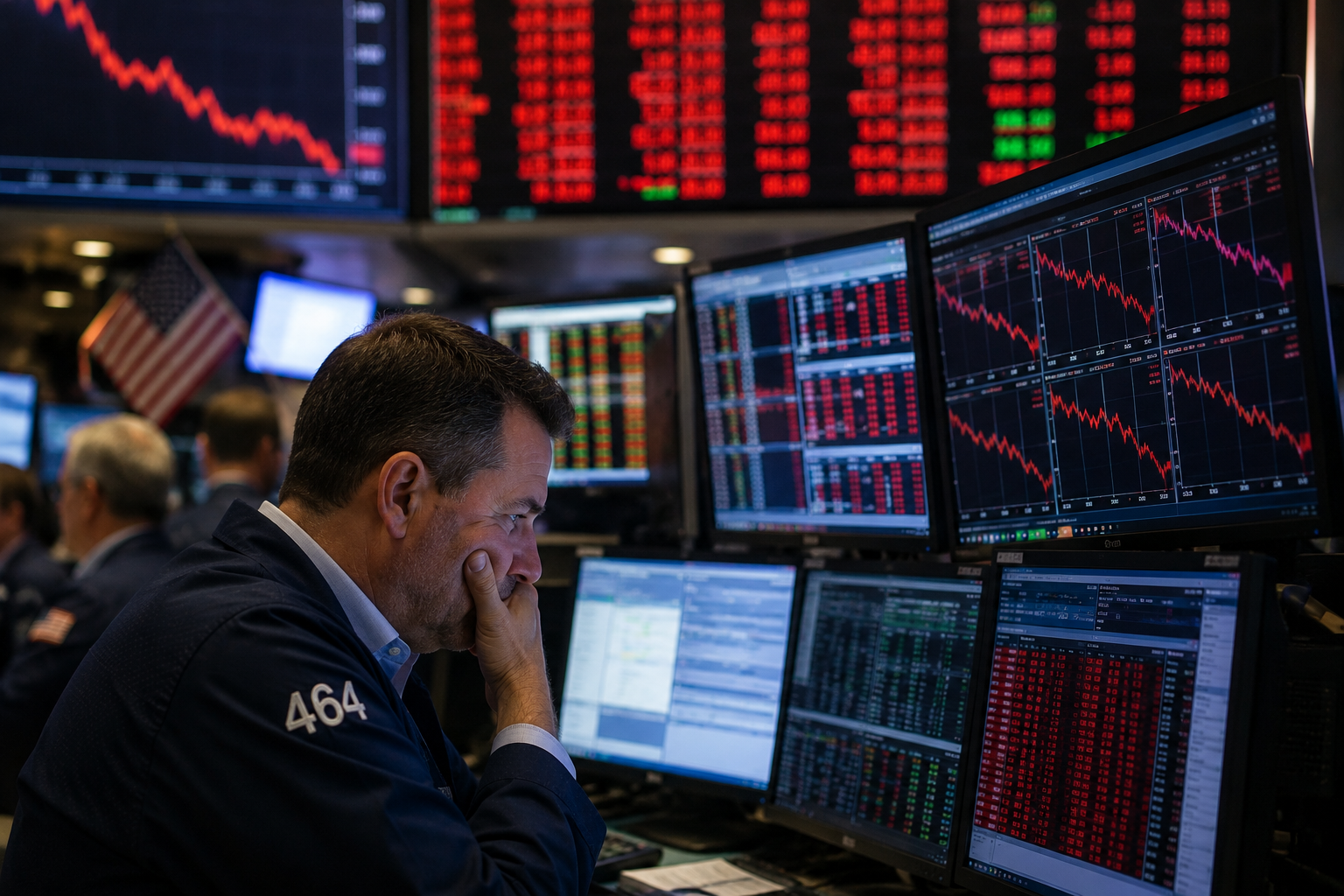
Semiconductor stocks are sliding on both sides of the Pacific, pushing investors toward safer sectors as Wall Street awaits the Fed’s decision.
A Rout That Started in Asia
The sell-off began overnight in Asian markets, where memory-chip makers bore the brunt of the damage. South Korea’s SK Hynix plunged nearly 15% by the close, while Samsung Electronics tumbled more than 13%, as investors grew skeptical of the frenzied buying that had propelled memory stocks for much of the first half of 2026. That skepticism quickly crossed into U.S. premarket trading, where Micron Technology dropped over 4%, Nvidia slipped around 1.2%, and both Intel and AMD fell more than 3%. Nasdaq futures extended their losses as the chip-sector jitters spread.
It’s a sharp reversal for a group that had been one of the market’s standout performers. Even after the pullback, Sandisk remains the best-performing stock in the S&P 500 this year, still up more than 360% year-to-date — a reminder of just how far memory names had run before sentiment turned.
Money Moves to Safer Ground
As the tech trade wobbled, capital rotated into steadier corners of the market. Healthcare and financial stocks climbed to fresh intraday all-time highs, with the Health Care Select Sector SPDR ETF (XLV) gaining 2.7% and the Financial Select Sector SPDR ETF (XLF) adding 0.5%. The shift underscores a broader theme playing out across trading desks: after a tech-heavy rally that pushed valuations to lofty levels, investors are looking to lock in gains and park cash in sectors seen as less exposed to the volatility now gripping chipmakers.
The Fed Looms Large
The timing couldn’t be more sensitive. The Federal Open Market Committee is set to announce its latest policy decision on Wednesday, July 29, at 2:00 p.m. Most economists expect the Fed to hold its benchmark rate steady in the 3.50% to 3.75% range, which would mark the fifth consecutive meeting without a change since the central bank’s last cut in December 2025. Inflation running above the Fed’s 2% target has left policymakers cautious about cutting further, even as pressure builds from some corners of the market for relief on borrowing costs.
Adding to the uncertainty, Federal Reserve officials have been barred from public comment during the pre-meeting blackout period — a silence that has left traders with little guidance on how the central bank is weighing recent developments abroad.
Geopolitics Adds to the Volatility
Those developments took a troubling turn overnight as fighting flared again in the Middle East, reigniting tensions after a brief period of calm and reviving fears over global energy supplies. Crude oil prices jumped on the news, while U.S. equity-index futures slipped in response — another layer of risk for a market already digesting a chip-sector shakeout and an approaching rate decision.
What It Means for Investors
Taken together, the picture emerging this week is one of a market recalibrating on multiple fronts at once: a cooling of enthusiasm for the AI and memory-chip trade that has driven much of 2026’s tech gains, a rotation toward defensive sectors like healthcare and financials, and renewed geopolitical risk pushing energy costs higher just as the Fed weighs its next move. With so many moving parts converging in the same week, market watchers say volatility is likely to persist until there’s more clarity on both the interest-rate outlook and the situation in the Middle East.
Federal Finance Journal will continue monitoring these developments as the FOMC decision and further earnings reports roll in.