
The estimated reading time for this post is 252 seconds
Investors often ask a deceptively simple question: how much gold should I own?
There is no universal percentage that is right for everyone. Gold can serve as one component of a diversified portfolio, but the appropriate allocation depends on an investor’s goals, time horizon, risk tolerance, liquidity needs and existing holdings.
The World Gold Council’s 2026 research tested hypothetical gold allocations of 2.5%, 5%, 7.5% and 10%, showing that portfolio results can vary by allocation. These are research scenarios, not recommendations for every investor.
1. Start With Your Investment Goal
Before asking how much gold should I own, decide why you want gold in the first place.
Some investors use gold as a diversification asset. Others want physical ownership of coins or bars. The purpose matters because every asset should have a defined role in a portfolio.
Investor.gov notes that asset allocation should reflect an investor’s time horizon and risk tolerance, while diversification is intended to spread risk across investments.
2. Look at Your Entire Portfolio
Gold should not be evaluated in isolation.
Review your current mix of stocks, bonds, cash, real estate, commodities and other alternative investments. If you already have significant exposure to commodities or alternatives, adding a large gold position could increase concentration rather than improve diversification.
The World Gold Council describes gold as a potential complement to stocks and bonds, but the effect depends on the portfolio being analyzed.
3. Remember That Gold Prices Can Fall
Gold is not a guaranteed-profit asset.
Its price can rise or decline in response to interest rates, currencies, investor demand, economic expectations and market conditions. A higher gold allocation therefore does not automatically mean a safer portfolio.
This matters especially if you may need to sell during a period when gold prices are below your purchase price.
4. Consider Time Horizon and Risk Tolerance
The answer to how much gold should I own can change as your circumstances change.
An investor with a long time horizon may tolerate more price volatility than someone saving for a near-term goal. Someone uncomfortable with commodity-price movements may prefer a smaller allocation.
Investor.gov recommends considering time horizon and risk tolerance when setting an asset allocation.
5. Account for Physical Gold Costs
If you specifically want physical gold, the purchase price is only one part of the calculation.
The CFTC advises buyers to compare the spot price with the dealer’s retail price and understand the spread between what a dealer charges and what it may pay when buying metal back. Other potential costs include storage, insurance and administrative fees.
These costs matter because a large premium or wide spread can make it harder to break even.
For readers researching physical gold dealers, Money Metals Exchange is one provider to compare with other established dealers. Compare premiums, product availability, shipping policies and buyback terms before purchasing.
Money Metals confirms that its affiliate program provides tracking links for approved affiliates and pays commissions on qualifying referred purchases.
6. Keep Liquidity in Mind
Physical gold can be sold, but it is not the same as cash in a bank account.
Investors should know how they would sell their holdings and what price or spread could apply. The CFTC specifically recommends asking what a dealer would pay if the buyer had to sell the metal back.
If savings may be needed for an emergency, putting too much money into physical assets may reduce financial flexibility.
7. Think About Gold’s Portfolio Role
So, how much gold should I own?
Define the role you want gold to play, then evaluate how different allocations affect the overall portfolio.
The World Gold Council’s 2026 analysis found that, in one hypothetical U.S.-dollar portfolio, adding 2.5% to 10% gold improved certain historical risk-adjusted measures and reduced drawdowns over the period studied. Its research also shows that the optimal allocation can vary depending on the starting portfolio.
That does not mean every investor should own 2.5%, 5%, 7.5% or 10% gold. It means allocation decisions should be based on portfolio construction rather than a headline percentage.
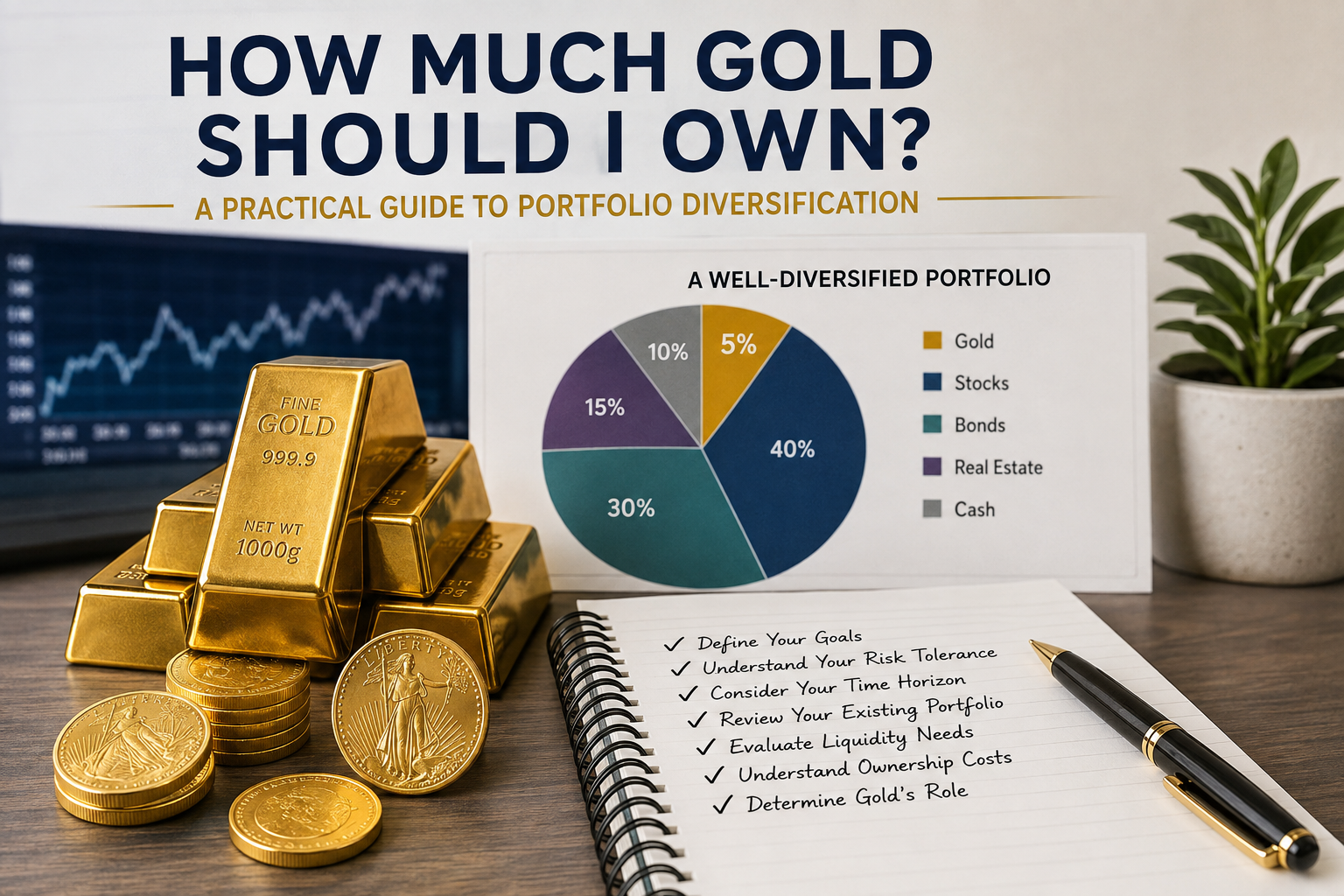
A simple checklist is:
- Investment goal
- Time horizon
- Risk tolerance
- Existing asset allocation
- Liquidity needs
- Physical ownership costs
- Desired role of gold
Read more: Physical Gold and Silver: 7 Essential Tips for Smart Investors

How Much Gold Should You Own? The Bottom Line
There is no responsible one-size-fits-all answer to how much gold should I own.
Gold may provide diversification and liquidity characteristics that can complement a broader portfolio, but it also carries price risk and, in physical form, transaction and ownership costs.
The best approach is to decide what you want gold to accomplish, assess your existing investments and choose an allocation that fits your overall financial plan. Avoid increasing your gold position simply because prices are rising or market headlines are creating fear.
Editorial Note: This article provides general financial information and is not individualized investment advice.