
The estimated reading time for this post is 204 seconds
Last Updated: August 9, 2026
Reviewed by: Nabila Delayovita
SEC filing requirements 2026 are getting stricter. Missing a single SEC filing can cost a public company millions in fines and investor trust. With new climate and cybersecurity disclosure rules effective in 2026, compliance is more complex than ever.
1. Annual Report: Form 10-K
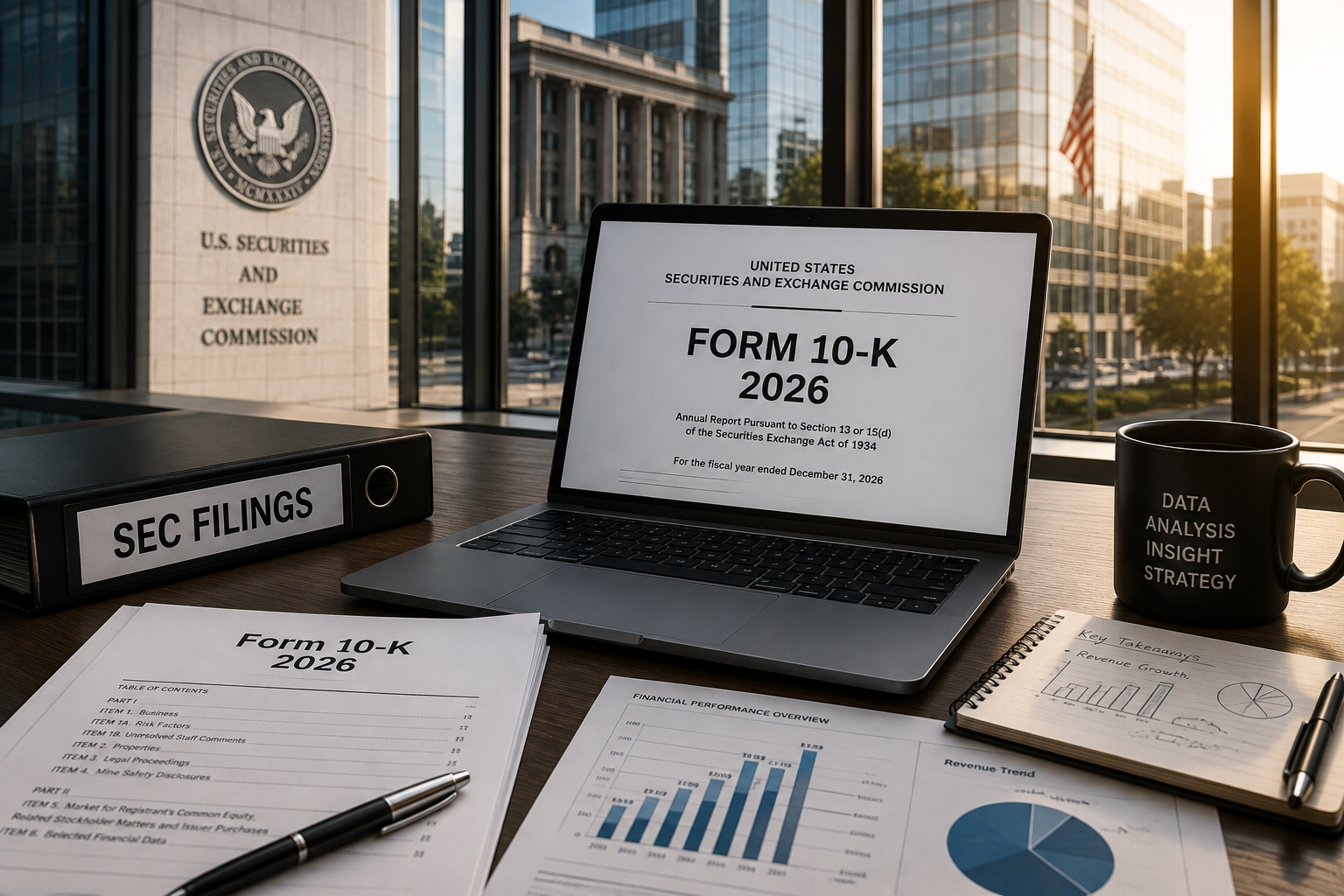
The 10-K is the most important filing. It’s due 60-90 days after fiscal year-end depending on company size. It must include audited financial statements, risk factors, MD&A, and executive compensation. 2026 Update: The SEC now requires more detailed disclosure on supply chain risks. Penalty for Late Filing: Can lead to delisting and SEC enforcement actions.
2. Quarterly Report: Form 10-Q
Filed 40-45 days after each quarter. This is why sec filing requirements 2026 now include faster cybersecurity reporting. This gives investors an unaudited snapshot of financial health. What’s new in 2026: Companies must disclose any “material” cybersecurity incidents within 4 business days, not just in the next 10-Q. Fix: Set up an internal incident response team to assess materiality fast.
3. Current Report: Form 8-K
This is for “material events” that shareholders need to know immediately. Examples: CEO changes, mergers, bankruptcy, new contracts, or cybersecurity breaches. The 4-day deadline is the most urgent part of sec filing requirements 2026.
2026 Rule: The SEC’s cybersecurity rule requires disclosure of material incidents within 4 business days of determining materiality. Fix: Have a pre-approved 8-K template and legal review process ready.
4. Proxy Statement: Schedule 14A
Sent before the annual shareholder meeting. It covers board elections, executive pay, and shareholder proposals. 2026 Update: The SEC’s “Pay vs Performance” rules require a new table comparing executive compensation to company financial performance. Don’t ignore this new section in sec filing requirements 2026. Why it matters: This is where activist investors look first.
5. Climate-Related Disclosures This is the biggest change for 2026.
This is the biggest change to sec filing requirements 2026.
Required for Large Accelerated Filers. Covers Scope 1, Scope 2 emissions, and climate risks that impact finances. Must be included in the 10-K starting 2026. Penalty for Non-Compliance: Can trigger SEC investigation and restatements.
Table : Key SEC Filing Deadlines 2026
| Form | Who Files | Deadline | Purpose |
| Form 10-K | Public Companies | 60-90 days after FYE | Annual Report |
| Form 10-Q | Public Companies | 40-45 days after Q-end | Quarterly Report |
| Form 8-K | Public Companies | Within 4 business days | Material Events |
| Schedule 14A | Public Companies | Before Annual Meeting | Proxy Statement |
Deadlines vary by filer status: Large Accelerated, Non-Accelerated
Common Mistakes to Avoid in 2026
Even large companies still mess up sec filing requirements 2026. Here are the 3 most common errors:
- Missing the 4-Day 8-K Rule: The new sec cybersecurity disclosure rule means you can’t wait for the next 10-Q. You have 4 business days once an incident is deemed “material”.
- Wrong Emissions Data: For climate disclosures, Scope 1 and 2 data must be audited. Guessing will trigger an SEC comment letter.
- Forgetting Pay vs Performance: The new table in Schedule 14A is mandatory. Many IR teams missed this in the first proxy season of 2026.
The best fix is to use a compliance calendar and EDGAR filing software. It tracks all sec filing requirements 2026 deadlines automatically.
FAQ
Q: What happens if a company files late?
A: The SEC can issue a Wells Notice, fines, and in severe cases, trading suspensions. It also triggers a “late filer” status that hurts stock price.
Q: Do private companies need to file with the SEC?
A: Generally no. Only public companies and companies with 500+ shareholders and $10M+ in assets must file. Disclaimer This article is for informational purposes only and does not constitute legal advice. Consult with securities counsel for guidance specific to your company.
Read more : AI Stock Selloff Deepens Ahead of Fed Decision
Disclaimer
This article is for informational purposes only and does not constitute legal advice. Consult with securities counsel for guidance specific to your company.
Sources
1. U.S. Securities and Exchange Commission. “Forms 10-K, 10-Q, and 8-K”. http://SEC.gov
2. U.S. Securities and Exchange Commission. “Cybersecurity Risk Management, Strategy, Governance, and Incident Disclosure”. http://SEC.gov, Final Rule 2023-2026
3. U.S. Securities and Exchange Commission. “The Enhancement and Standardization of Climate-Related Disclosures”. http://SEC.gov, Final Rule 2024
4. U.S. Securities and Exchange Commission. “Pay Versus Performance Disclosure”. http://SEC.gov