
The estimated reading time for this post is 483 seconds
Planning a trip usually means thinking about flights, hotels, restaurants, and activities. Travel insurance tends to appear much lower on the list.
For many travelers, that is understandable. Paying for something that may never be used can feel unnecessary.
But travel insurance is designed to help protect travelers against certain financial losses resulting from covered unexpected events. The important question is not simply whether to buy coverage. It is understanding what a policy actually covers, what it excludes, and whether it fits the trip.
Why Travel Insurance Can Matter
A canceled flight may be inconvenient. A canceled vacation can be significantly more expensive.
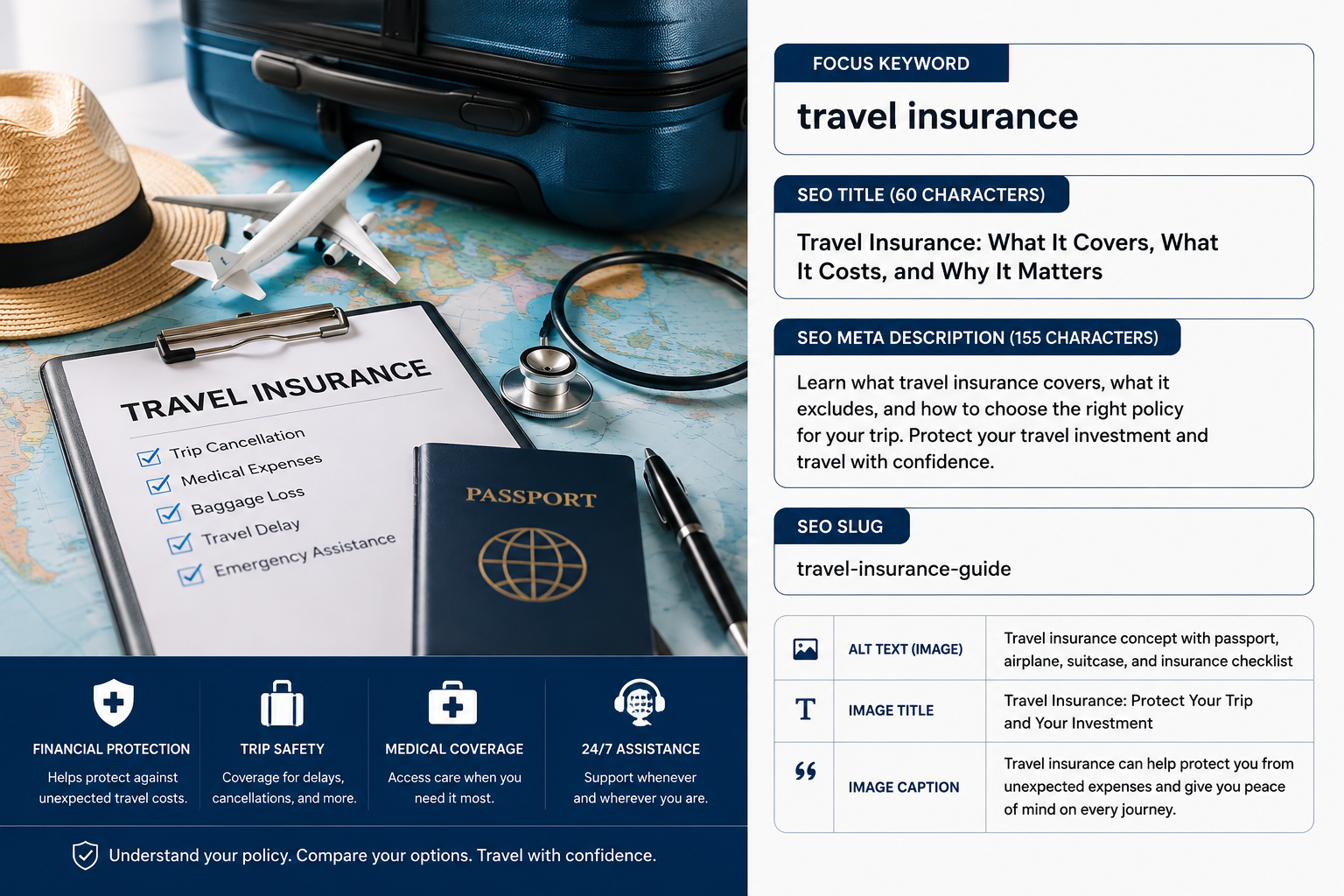
Depending on the policy, travel insurance may provide coverage for certain medical expenses, trip cancellations, trip interruptions, baggage problems, travel delays, emergency assistance, or evacuation.
The exact protection varies substantially between plans.
That is why travelers should avoid choosing a policy based solely on price.
A less expensive policy may have lower coverage limits, more exclusions, higher deductibles, or narrower cancellation conditions than a more expensive alternative.
The right policy depends on the traveler’s circumstances and the financial risks associated with the trip.
What Can Travel Insurance Cover?
Travel insurance policies can contain several different types of protection.
Common coverage categories may include:
- Emergency medical expenses for eligible treatment during a trip
- Trip cancellation for certain covered reasons
- Trip interruption when a covered event causes a traveler to cut a trip short
- Baggage protection for certain lost, stolen, or damaged belongings
- Travel delay coverage when qualifying delays create eligible additional expenses
- Emergency assistance for certain situations that arise during travel
- Emergency evacuation in policies that provide this type of protection
However, the presence of a coverage category does not mean every situation is automatically covered.
Limits, exclusions, deductibles, eligibility requirements, and covered-event definitions can differ between policies.
Travelers should therefore review the actual policy wording before purchasing coverage.
The Fine Print Matters
Travel insurance is one area where reading the policy details can make a major difference.
Important questions include:
- What medical expenses are covered?
- Are pre-existing conditions excluded or subject to special conditions?
- What qualifies as a covered cancellation?
- How much baggage coverage is provided?
- Are there deductibles?
- Are adventure activities covered?
- Does the policy provide emergency assistance?
- Are there destination-specific restrictions?
- Are there coverage limits for particular expenses?
- How are claims submitted?
The cheapest policy is not necessarily the most appropriate policy.
Instead, travelers should compare the coverage against the specific risks associated with their trip.
What Should Travelers Compare?
Price is only one part of the comparison.
Before purchasing travel insurance, travelers may want to compare:
Medical Coverage
International medical expenses can potentially be substantial. Travelers should examine coverage limits, exclusions, deductibles, and whether emergency treatment is included.
Cancellation and Interruption
A policy may cover certain cancellations or interruptions, but not every reason for changing or abandoning a trip qualifies.
Review the list of covered events carefully.
Emergency Evacuation
Travelers visiting remote destinations or participating in higher-risk activities may want to pay particular attention to emergency transportation and evacuation provisions.
Baggage Protection
Travelers should check both the overall baggage limit and any sub-limits for individual items.
Exclusions
Exclusions can be just as important as the benefits listed in the policy.
Travelers should understand situations in which coverage does not apply.
Deductibles and Limits
Two policies can offer similar headline benefits while having very different deductibles and maximum payouts.
Looking at these details can provide a more realistic comparison.
When Travel Insurance May Be Less Useful
Not every traveler will have the same need for travel insurance.
Someone taking an inexpensive domestic trip with refundable bookings may face considerably less financial exposure than a traveler taking an expensive international vacation with nonrefundable flights, hotels, and prepaid activities.
Existing coverage can also matter.
Some travelers may already have certain protections through health insurance, credit-card benefits, or other arrangements. Those protections should be reviewed carefully because they may have specific limitations and may not provide the same coverage as a dedicated travel insurance policy.
The goal should not be to purchase insurance simply because it is available.
Instead, travelers should consider how much money is at risk and which potential problems would be most financially difficult to handle without additional coverage.
Why Comparing Policies Can Help
Shopping for insurance directly from one provider can make comparison difficult.
A comparison platform can provide another way to review multiple insurance options before making a decision.
This can be particularly useful for international trips, where coverage considerations may vary depending on the destination, trip length, traveler profile, and purpose of travel.
A comparison platform does not necessarily mean that the cheapest policy is the best option.
Its main value can be giving travelers an easier way to compare different plans and identify differences in coverage, limits, exclusions, and pricing.
A Look at HelloSafe
HelloSafe is an online comparison platform that offers travel insurance comparisons in several markets.
According to information published by HelloSafe, travelers can enter details such as their destination, travel dates, and traveler information to review available insurance options. The platform also presents different types of travel coverage, including single-trip and annual multi-trip options, depending on the market.
HelloSafe says its comparison process takes factors such as exclusions, sub-limits, assistance conditions, and waiting periods into account.
For travelers who prefer to review several policies in one place rather than visit individual insurer websites, this type of comparison service can be a practical starting point.
However, the comparison results should not replace reading the underlying insurance policy.
The final decision should be based on the actual terms, conditions, exclusions, limits, and eligibility requirements of the policy being considered.
What Makes a Comparison Platform Useful?
The main advantage of a comparison platform is the ability to review multiple options using similar trip information.
That can make it easier to identify differences between policies.
For example, a traveler might discover that one plan has a lower premium but also provides lower medical coverage, while another costs more but offers higher limits or broader protection for a particular risk.
This is why comparing the overall coverage, rather than simply sorting by price, can be useful.
Who Should Spend More Time Comparing Coverage?
Travelers with significant money at risk may benefit from spending more time comparing policies.
Consider someone booking a $5,000 international vacation involving multiple flights, hotels, and prepaid activities.
If a covered event forces the traveler to cancel, the financial exposure could be significant.
Travelers heading overseas may also want to pay particular attention to emergency medical coverage and evacuation provisions.
Frequent travelers may want to compare annual or multi-trip policies with single-trip coverage. Depending on the travel schedule and policy terms, an annual policy may be worth considering for someone who takes several trips during the year.
The important point is that coverage should match the traveler’s actual circumstances.
Don’t Buy Based on Price Alone
One of the most common mistakes travelers can make is treating travel insurance like a commodity.
Insurance is different from purchasing a generic product online.
Two policies can have similar prices but very different exclusions, limits, deductibles, and eligibility conditions.
A policy with a lower premium may therefore provide less protection for the particular risks a traveler is concerned about.
Before purchasing, travelers should read the policy documents and confirm that the coverage matches the trip.
A comparison platform can make the first stage easier, but the final decision should still be based on the policy terms.
A Practical Approach to Comparing Travel Insurance
A simple process can make the decision easier.
First, calculate the amount of money at risk.
Consider nonrefundable flights, accommodation, tours, deposits, and other prepaid expenses.
Second, identify the biggest potential risks.
For some travelers, medical expenses may be the primary concern. For others, cancellation, interruption, baggage, or emergency evacuation may matter more.
Third, check existing coverage.
Review health insurance, credit-card benefits, and other protections that may already apply to the trip.
Fourth, compare several policies.
Look beyond the premium and examine coverage limits, exclusions, deductibles, and covered events.
Finally, read the policy documents before purchasing.
The summary can help with comparison, but the actual terms and conditions determine what the policy covers.
This approach takes more time than simply selecting the first inexpensive policy, but it can provide greater confidence that the coverage matches the trip.
Read more: Scenario Planning for Finance Teams: Preparing for Best-Case and Worst-Case
The Bottom Line
Travel insurance may not be the most exciting part of planning a vacation, but it can become important when something goes wrong.
The value of travel insurance depends on the trip, the traveler’s circumstances, the amount of money at risk, and the specific terms of the policy.
For travelers who want to compare multiple options in one place, platforms such as HelloSafe can provide a convenient starting point.
The most important principle is simple: don’t choose travel insurance because it is cheap. Choose coverage based on the risks of the trip and the protection provided by the policy.
Sources
- U.S. Department of State — Travel planning and travel insurance guidance
- National Association of Insurance Commissioners — Travel Insurance
- HelloSafe — Travel Insurance Comparison and related policy information
Affiliate Disclosure: This article contains affiliate links. Federal Finance Journal may receive compensation if readers purchase products or services through these links, at no additional cost to the reader. Affiliate relationships do not determine our editorial conclusions.
This article is for informational purposes only and does not constitute insurance, legal, financial, or other professional advice. Insurance products, availability, pricing, terms, exclusions, and coverage vary by market and policy. Readers should review applicable policy documents and terms before purchasing coverage.