
The estimated reading time for this post is 347 seconds
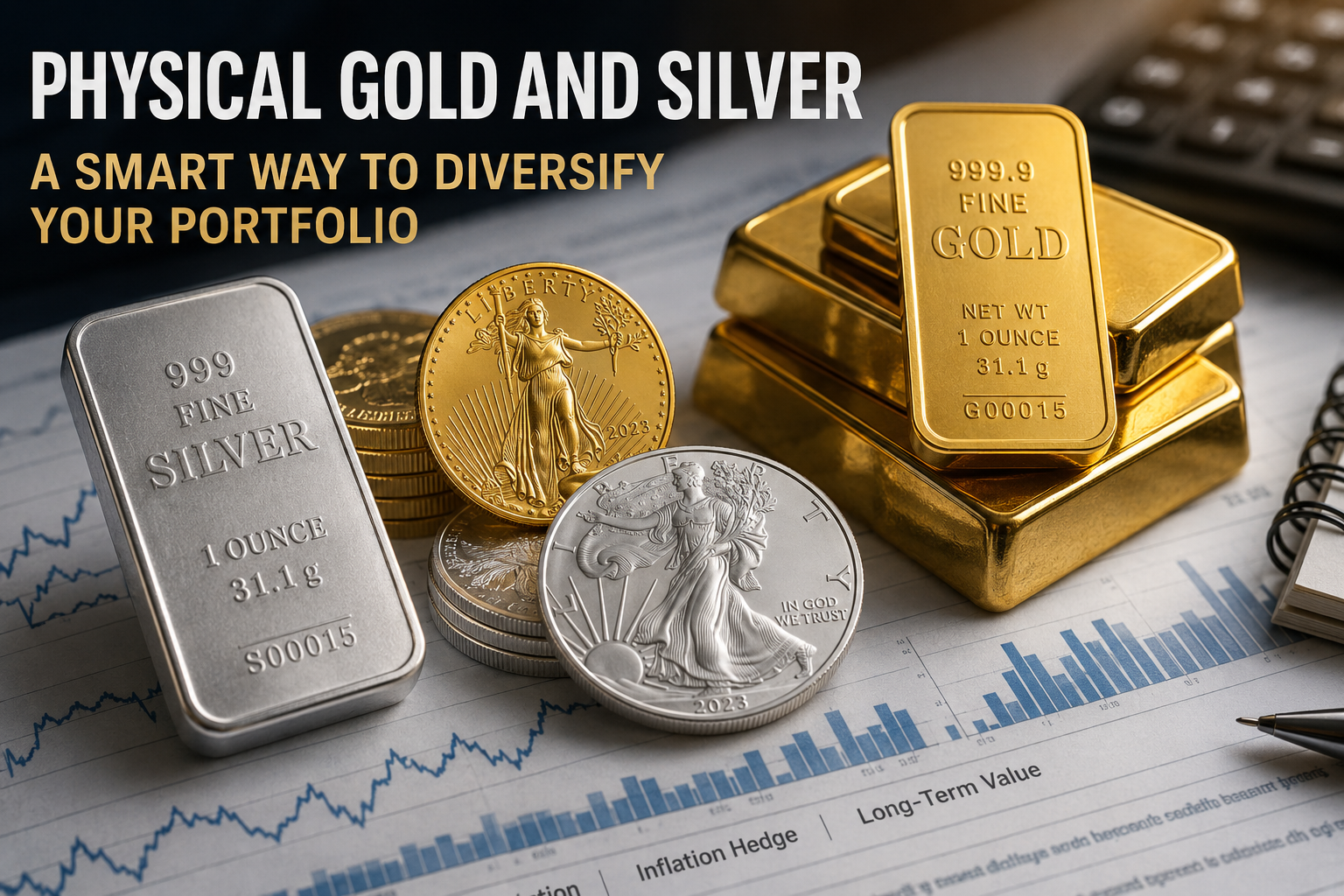
Gold and silver have occupied a unique position in financial markets for centuries. Unlike stocks, bonds, or bank deposits, physical precious metals are tangible assets that investors can own directly.
For investors considering physical gold and silver, however, buying bullion requires more than watching the spot price. Premiums, dealer spreads, storage, insurance, liquidity, and market volatility can all affect the economics of ownership.
Before placing an order, investors should understand how physical precious metals work and where the potential risks and costs come from.
1. Understand Why Investors Buy Physical Gold and Silver
Investors consider physical gold and silver for different reasons.
Some want direct ownership of a tangible asset. Others view precious metals as a potential diversification tool or want exposure to assets whose prices can respond differently to stocks and bonds under certain market conditions.
That does not mean precious metals are guaranteed to rise.
Gold and silver prices can decline, sometimes significantly. Physical ownership can also involve costs that do not apply in the same way to traditional securities.
For that reason, precious metals are generally better viewed as one potential component of a broader financial strategy rather than a replacement for diversification.
2. Know the Difference Between Spot Price and Premium
The spot price represents a reference price for the underlying metal. Physical bullion, however, is normally sold above spot.
The difference is commonly reflected in the product’s premium.
A physical gold coin, for example, may cost more than the value of the gold it contains because the retail price can include manufacturing, distribution, dealer, and other costs.
Premiums can vary based on:
- Product type
- Weight
- Mint or manufacturer
- Market conditions
- Dealer pricing
- Availability
- Order size
Investors should therefore compare the total purchase price, not just the quoted spot price.
3. Compare Dealer Spreads and Buyback Prices
The purchase price is only half of the equation.
Investors should also determine what a dealer may pay when they decide to sell.
The difference between the dealer’s selling price and potential buyback price can create a spread that affects the investor’s return.
The U.S. Commodity Futures Trading Commission advises consumers to understand dealer spreads, fees, and buyback policies before purchasing precious metals.
This is particularly important when evaluating physical gold and silver because the market price may need to increase before an investor recovers the original premium and transaction costs.
Before buying, ask two basic questions:
How much am I paying?
How much could I receive if I sell?
4. Compare More Than the Product Price
Price should not be the only comparison point.
Investors researching physical gold and silver should also consider:
- Shipping costs
- Payment fees
- Storage charges
- Insurance
- Product premiums
- Minimum order requirements
- Dealer buyback policies
- Delivery procedures
The product itself also matters.
Standard bullion bars and coins can have different premiums and resale characteristics. Collectible or numismatic products may involve additional pricing considerations that differ from ordinary bullion.
A lower advertised price does not necessarily mean a lower overall cost.
5. A Look at Money Metals Exchange
Money Metals Exchange is a U.S.-based online bullion dealer offering physical precious metals.
According to information published by the company, its product range includes gold, silver, copper, platinum, palladium, and rhodium. The company also offers products such as coins, bars, and rounds, along with services related to storage and recurring purchases.
For investors who prefer online purchasing, a bullion dealer can provide a convenient way to research available products and compare pricing.
However, investors should still conduct their own due diligence and compare terms with other dealers before purchasing.
The CFTC recommends that consumers researching precious-metals dealers investigate factors such as the company’s operating history, physical address, and complaint information.
[Explore Physical Gold & Silver Options → AFFILIATE LINK]
6. Storage and Liquidity Matter
Buying physical metals creates a practical question that investors do not face in quite the same way with many account-based investments:
Where will the metal be stored?
Some investors choose home storage, while others use professional depositories.
Home storage may provide direct access but can create security and insurance considerations. Professional storage can provide additional safeguards but may involve ongoing fees and withdrawal conditions.
Investors should understand storage costs, insurance arrangements, access rules, and delivery charges before choosing a solution.
Liquidity is another consideration.
An investor may be able to purchase bullion quickly but still need to consider how easily it can be sold and what price a dealer will offer.
The ability to sell should be considered before buying.
7. Physical Gold and Silver Are Not Risk-Free
Precious metals are sometimes marketed as safe-haven assets, but that does not mean they are risk-free.
Prices can be affected by interest rates, inflation expectations, currency movements, central-bank activity, industrial demand, investor sentiment, and geopolitical developments.
Physical ownership also creates premiums, storage costs, and potential resale spreads.
Investors should be particularly cautious about claims that gold or silver will produce guaranteed returns.
The CFTC and FINRA have warned investors about high-pressure precious-metals sales tactics and claims that present precious metals as investments with little or no risk.
A legitimate investment decision should not require immediate action.
A Practical Approach Before Buying
Before purchasing physical gold and silver, investors can use a simple checklist:
First, determine why the metal is being added to the portfolio.
Second, compare the product price with the current spot price.
Third, calculate the premium and potential dealer spread.
Fourth, account for shipping, storage, insurance, and other costs.
Fifth, research the dealer and understand its buyback process.
Finally, consider whether the purchase fits the investor’s broader financial strategy.
This approach can help investors evaluate the complete economics of physical bullion rather than focusing only on the headline price.
Read more: AI Stock Selloff Deepens Ahead of Fed Decision
The Bottom Line
Physical gold and silver can provide investors with direct ownership of tangible assets and may have a role in some diversified strategies.
But physical precious metals are not guaranteed investments. Premiums, dealer spreads, storage, liquidity, and market volatility can all affect the outcome.
Online bullion dealers such as Money Metals Exchange can provide a convenient way to research and purchase precious metals, but investors should compare available options and conduct their own due diligence.
The most important principle is simple: understand the costs and risks before buying, rather than assuming that precious metals are automatically safe or profitable.
Sources
- U.S. Commodity Futures Trading Commission — Precious Metals
- FINRA — Precious Metals and Investor Risks
- Money Metals Exchange — Company and Product Information
Affiliate Disclosure: This article contains affiliate links. Federal Finance Journal may receive compensation if readers purchase products or services through these links, at no additional cost to the reader. Affiliate relationships do not determine our editorial conclusions.
This article is for informational purposes only and does not constitute investment, financial, tax, or legal advice. Precious metals involve market risk, and prices can decline. Investors should independently evaluate any investment and consider consulting a qualified professional where appropriate.