The estimated reading time for this post is 209 seconds
AI anomaly detection is now the #1 tool finance teams use to catch fraud before it scales.
Every year, businesses lose over $5 trillion to fraud. The old way of waiting for month-end audits is dead. In 2026, the companies winning are using AI to spot problems the same day they happen.
Here’s how it works and how to implement it.
1. What Is AI-Powered Anomaly Detection in Finance?
Anomaly detection is the process of finding data points that don’t fit normal patterns. Humans can’t do this across millions of transactions.
AI models learn what “normal” looks like for your company. Then they flag anything weird instantly.
Examples of “normal”: An employee submits $200 in travel. A vendor is paid on Net 30. A sale closes in the CRM.
Examples of “anomalies”: A $200 travel expense at 2 AM in another country. A vendor bank account suddenly changes. A sale is closed but has no contract.
Without AI, you find this 3 months later. With AI, you find it in 4 minutes.
2. The 4 Biggest Use Cases for Finance Teams in 2026
A. Accounts Payable Fraud
The #1 use case. AI scans every invoice and payment.
It flags: Duplicate invoices, vendors with PO Box addresses, bank account changes, split invoices to avoid approval limits.
Result: One Fortune 500 company stopped $14M in fraudulent payments in Q1 2026 alone.
B. Expense Report Abuse
AI reads receipts, not just amounts.
It flags: Personal expenses, photoshopped receipts, duplicate Uber rides, employees expensing during PTO.
2026 Update: New models can detect AI-generated fake receipts.
C. Revenue Leakage and Billing Errors
AI compares contracts, CRM data, and invoices.
It flags: Customers getting free services not in the contract, pricing that’s below the floor, subscriptions not renewed.
Result: SaaS companies use this to recover 2-5% of lost revenue.
D. Payroll and Identity Fraud
AI monitors HR and payroll systems.
It flags: Ghost employees, duplicate direct deposits, login from 2 countries at once, sudden salary changes.
3. How The AI Actually Works: 3 Layers
You don’t need a data science team to use this. Modern tools do it for you.
1. Layer 1: Pattern Learning: The AI watches 90 days of your data to learn “normal”.
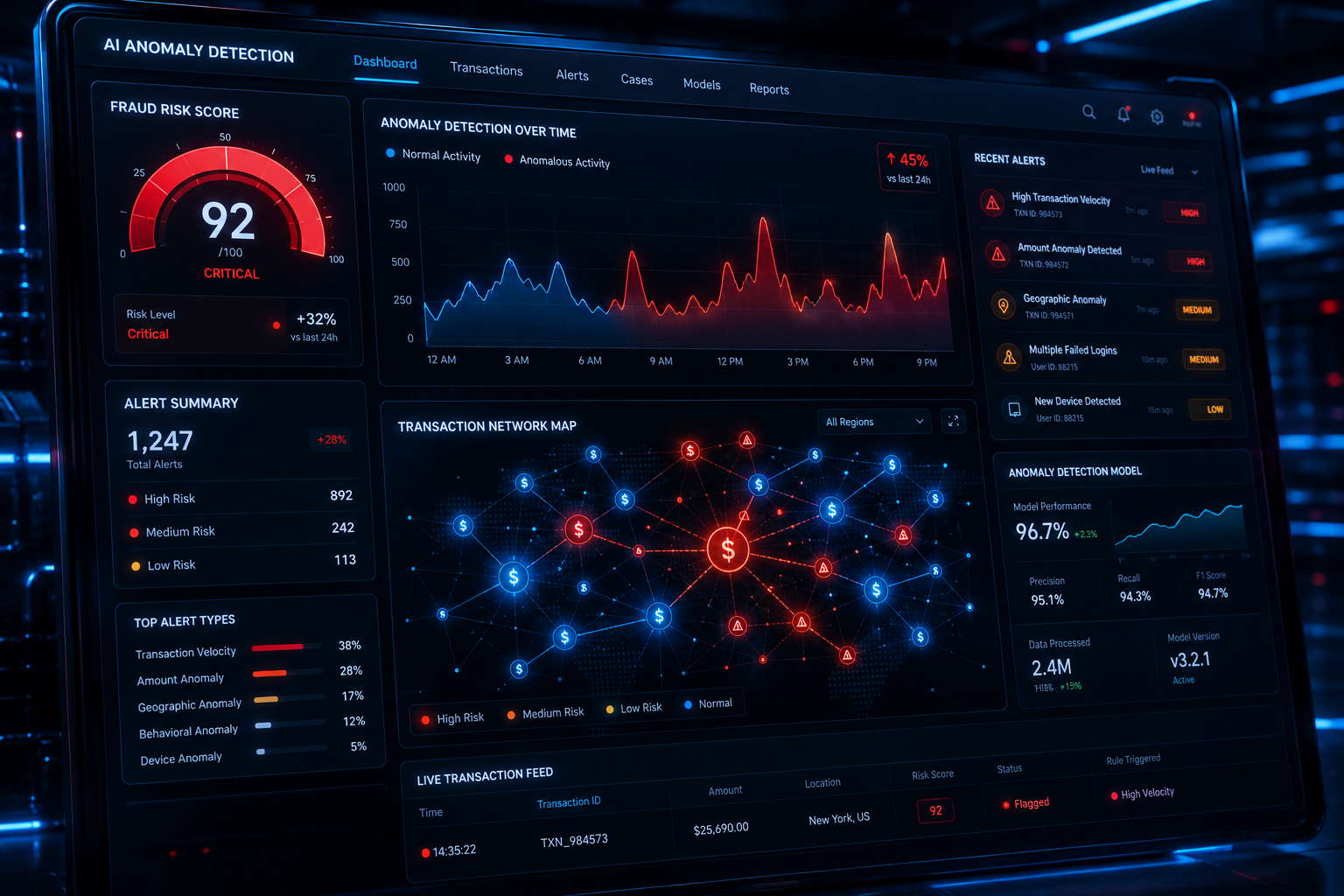
2. Layer 2: Real-Time Scoring: Every new transaction gets a “risk score” from 0-100. Anything over 85 is flagged.
3. Layer 3: Human Review: The AI explains _why_ it flagged something. “This invoice is 300% higher than last 6 months from this vendor.”
This is called explainable AI and it’s required for audit trails in 2026.
4. Top AI Anomaly Detection Tools for 2026
Tool Best For Key Feature
Datarails + GPT FP&A Teams Anomaly alerts inside Excel/Sheets
MindBridge Ai Auditor Audit and Risk Reads 100% of transactions, not samples
AppZen AP and Expenses Catches fake receipts with computer vision
HighRadius AR and Revenue Finds billing leakage in Salesforce + ERP
Most integrate with NetSuite, SAP, and Oracle in under 2 weeks.
5. How To Implement in 30 Days
1. Week 1: Pick 1 Pain Point: Start with AP fraud. It has the fastest ROI.
2. Week 2: Connect Data: Link your ERP, bank, and expense tool. The AI needs data to learn.
3. Week 3: Set Thresholds: Work with your auditor to set what a “high risk” score is.
4. Week 4: Go Live + Train Team: Finance now gets a daily email of “Top 5 Risks” instead of 500 reports.
Biggest Mistake: Trying to detect everything at once. Start small, prove ROI, then scale.
Read more : 5 Corporate Disclosure Rules Every Public Company Must Follow in 2026
AI Anomaly Detection FAQ
Q: What is the difference between anomaly detection and fraud detection?
Anomaly detection finds anything “weird” in the data. Fraud detection is one type of anomaly. AI anomaly detection also catches errors, waste, and revenue leakage that aren’t fraud.
Q: How accurate is AI anomaly detection in 2026?
Top tools like MindBridge and AppZen now have 95%+ accuracy. The AI learns your “normal” for 90 days, so false positives drop a lot after month 1.
Sources & References
According to the ACFE Report to the Nations 2024, organizations lose an estimated 5% of revenue to fraud each year, or about $4.7 trillion globally.
The U.S. Securities and Exchange Commission has emphasized stronger internal controls and technology-driven risk monitoring for 2026 filings.
A Gartner 2025 report predicts that by 2026, 3 out of 4 CFOs will use AI-powered anomaly detection as part of their standard finance operations.