The estimated reading time for this post is 285 seconds
Payroll is one of the most critical responsibilities within any finance department. Employees expect to be paid accurately and on time, while businesses must comply with tax regulations, labor laws, and reporting requirements. Even a minor payroll mistake can lead to employee dissatisfaction, compliance issues, financial penalties, and reputational damage.
As organizations continue to modernize their finance operations, reducing payroll errors has become a strategic priority rather than simply an administrative task. Finance leaders are investing in automation, stronger internal controls, better data management, and standardized payroll processes to improve accuracy while reducing manual workloads.
In today’s business environment, companies recognize that payroll accuracy directly impacts employee trust, operational efficiency, and overall financial performance.
Why Payroll Errors Are More Costly Than Ever
Payroll mistakes extend beyond incorrect paychecks.
Errors may result in:
- Incorrect tax withholdings
- Late salary payments
- Overtime calculation mistakes
- Duplicate employee records
- Incorrect employee classifications
- Compliance penalties
- Employee complaints
When payroll issues occur repeatedly, finance teams spend valuable time correcting mistakes instead of focusing on budgeting, forecasting, and financial planning.
Reducing payroll errors has therefore become an important operational objective for finance departments worldwide.
Common Causes of Payroll Errors
Most payroll problems originate from manual processes rather than payroll software itself.
Some of the most common causes include:
Manual Data Entry
Entering employee information manually increases the likelihood of:
- Typing mistakes
- Duplicate records
- Incorrect salary amounts
- Wrong tax codes
Even small data entry errors can affect hundreds of employees during payroll processing.
Outdated Employee Information
Payroll systems rely on accurate employee records.
Problems arise when changes involving:
- Salary adjustments
- Promotions
- Tax elections
- Bank account information
- Benefits enrollment
are not updated promptly.
Maintaining clean employee data significantly reduces payroll discrepancies.
Inconsistent Approval Processes
Without standardized approval workflows, payroll adjustments may be processed without proper verification.
Examples include:
- Bonus approvals
- Overtime hours
- Commission payments
- Expense reimbursements
Multiple review levels help identify mistakes before payroll is finalized.
How Automation Is Reducing Payroll Errors
Automation has transformed payroll operations across organizations of all sizes.
Rather than relying on spreadsheets and manual calculations, finance departments increasingly use integrated payroll platforms that automatically process employee information.
Automation improves:
- Payroll calculations
- Tax withholding
- Benefits deductions
- Direct deposits
- Payroll reporting
By minimizing repetitive manual tasks, automation substantially lowers the risk of human error.
Standardizing Payroll Procedures
Successful finance departments rely on documented payroll procedures rather than individual knowledge.
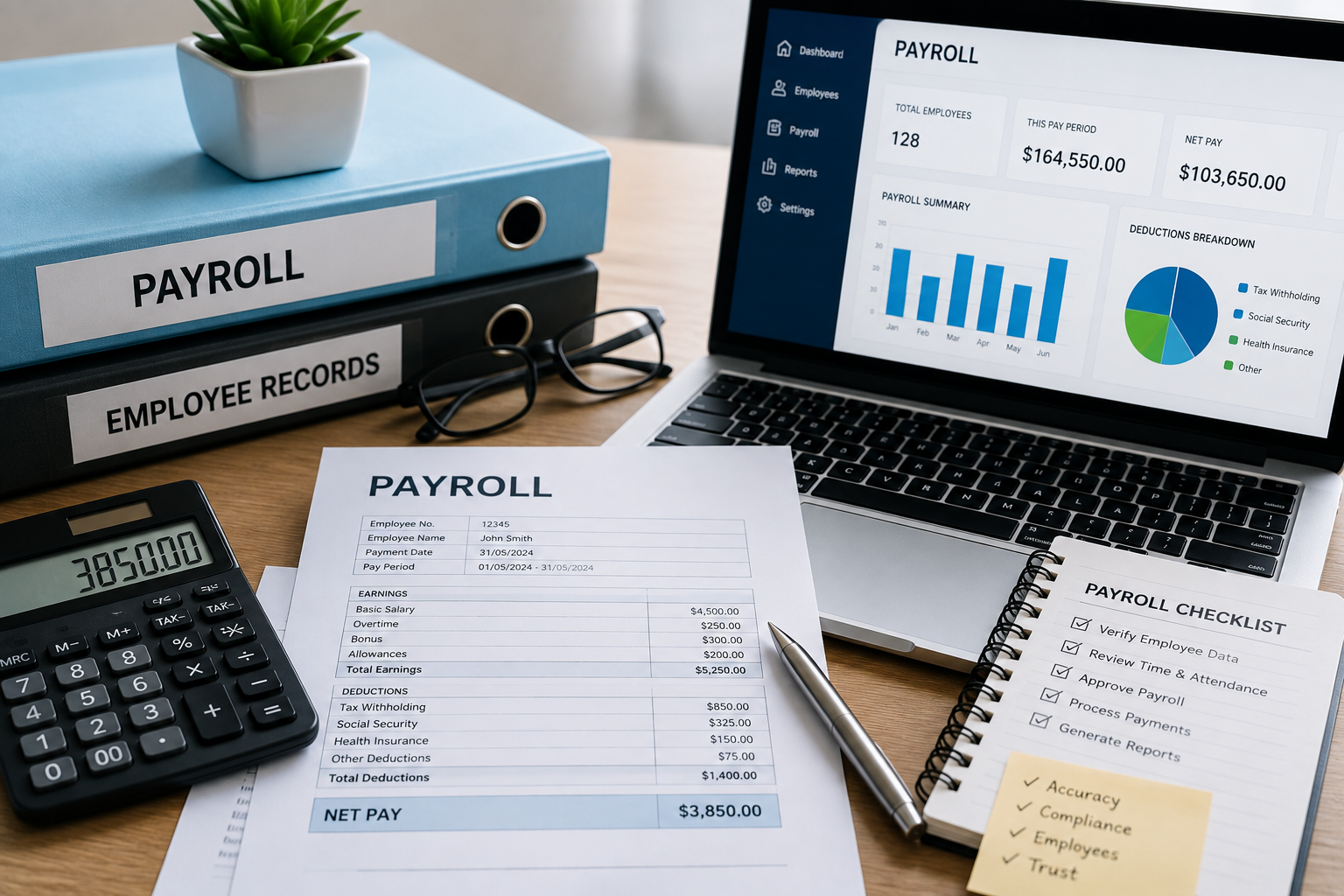
Standardized payroll checklists often include:
- Employee record verification
- Timekeeping validation
- Overtime approval
- Tax review
- Benefit deductions
- Final payroll reconciliation
Consistent procedures reduce variability and improve payroll accuracy across every pay cycle.
Improving Data Accuracy Before Payroll Processing
Many payroll errors originate before payroll calculations even begin.
Finance teams now conduct regular audits of:
- Employee master data
- Tax information
- Benefit elections
- Banking details
- Employment status
Routine data validation ensures payroll systems operate using accurate information.
Preventing incorrect data from entering the system is often more effective than correcting errors afterward.
Integrating Payroll With HR and Accounting Systems
Disconnected software frequently creates duplicate work.
Modern finance departments increasingly integrate payroll with:
- Human Resources Information Systems (HRIS)
- Time tracking software
- Accounting systems
- Benefits administration platforms
Integration automatically synchronizes employee information across departments.
When salary changes occur in HR systems, payroll records update automatically, reducing manual intervention.
Using Employee Self-Service Portals
Employee self-service portals have become another effective way to reduce payroll errors.
Employees can securely update:
- Direct deposit information
- Tax withholding preferences
- Personal information
- Contact details
Allowing employees to maintain their own records reduces administrative work while improving data accuracy.
Finance departments also spend less time responding to routine payroll requests.
Strengthening Payroll Controls
Internal controls remain essential even when payroll is automated.
Leading finance departments typically implement:
- Segregation of duties
- Multi-level approvals
- Audit trails
- Exception reporting
- Payroll reconciliations
- Access controls
These safeguards reduce fraud risk while identifying unusual payroll transactions before payments are issued.
Strong governance supports both financial accuracy and regulatory compliance.
Leveraging Payroll Analytics
Payroll reporting has evolved beyond historical summaries.
Finance departments increasingly monitor payroll metrics such as:
- Payroll accuracy rate
- Correction frequency
- Processing time
- Overtime trends
- Payroll cost per employee
- Payroll exception reports
These key performance indicators help identify recurring issues before they become larger operational problems.
Analytics also supports continuous process improvement by highlighting opportunities for greater efficiency.
Training Payroll Teams
Technology alone cannot eliminate payroll errors.
Finance professionals require ongoing training covering:
- Payroll regulations
- Tax updates
- Internal procedures
- Payroll software
- Data security
- Compliance requirements
Continuous education ensures payroll teams remain prepared for changing regulatory environments and evolving business needs.
The Business Benefits of Accurate Payroll
Organizations that consistently reduce payroll errors experience benefits beyond administrative efficiency.
Improved payroll accuracy contributes to:
- Higher employee satisfaction
- Better compliance
- Lower administrative costs
- Reduced audit findings
- Faster payroll processing
- Improved financial reporting
Accurate payroll also strengthens employee confidence, helping businesses attract and retain skilled talent.
Preparing Payroll Operations for the Future
As artificial intelligence, automation, and cloud-based finance systems continue to evolve, payroll departments are becoming increasingly proactive.
Rather than simply processing employee payments, finance teams now use payroll data to support workforce planning, budgeting, and strategic decision-making.
Future payroll operations will likely emphasize:
- Predictive payroll analytics
- AI-assisted error detection
- Real-time payroll reporting
- Continuous compliance monitoring
- Greater system integration
Organizations investing in these technologies today are positioning themselves for more resilient finance operations tomorrow.
Final Thoughts
Reducing payroll errors requires more than implementing new software. It demands accurate employee data, standardized procedures, strong internal controls, continuous training, and integrated finance systems working together.
Finance departments that combine automation with disciplined payroll governance are better equipped to improve accuracy, strengthen compliance, and enhance operational efficiency. As payroll processes become increasingly digital, organizations that prioritize payroll accuracy will be well positioned to build employee trust while supporting long-term financial performance.