
The estimated reading time for this post is 328 seconds
Travel plans often involve significant upfront costs. Flights, hotels, tours and transportation may be booked weeks or months before departure, leaving travelers financially exposed if an unexpected event changes their plans.
Travel insurance coverage can help travelers manage certain financial risks when unexpected events disrupt a planned trip.
That is where travel insurance coverage can become useful.
Travel insurance can provide financial protection for certain medical expenses, trip disruptions and other covered events. However, policies vary widely. A benefit advertised by one insurer may have different limits, exclusions or eligibility requirements from another.
According to the National Association of Insurance Commissioners (NAIC), travelers should review coverage limits and exclusions before purchasing a policy.
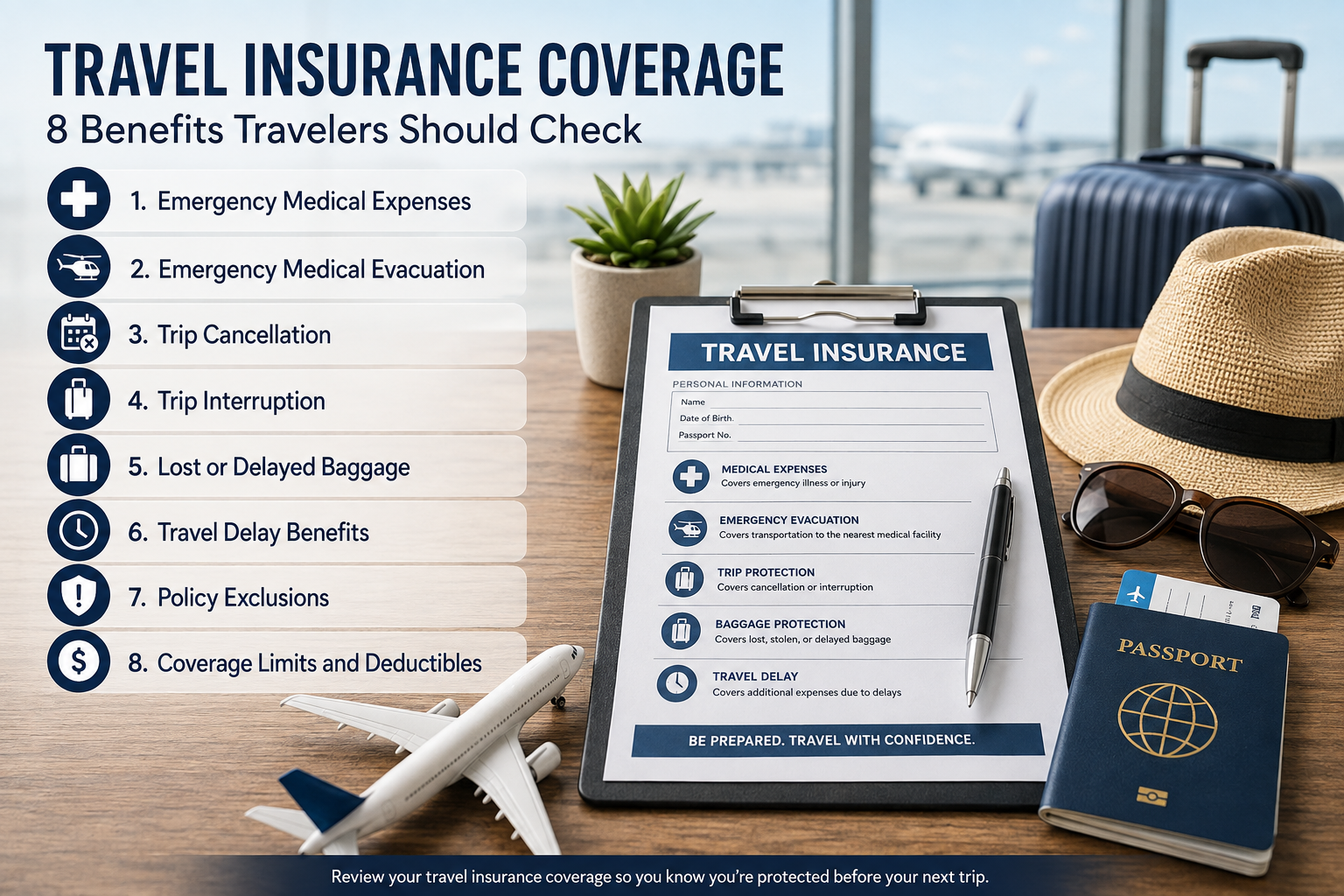
Here are eight areas travelers should check.
1. Emergency Medical Expenses
Travel insurance coverage can include emergency medical benefits, making this one of the most important areas to review before an international trip.
A policy may cover eligible medical treatment if a traveler becomes sick or injured during a trip. However, coverage can depend on the destination, medical circumstances, policy limits and whether the traveler meets the insurer’s requirements.
Travelers should also check how the policy handles pre-existing medical conditions.
The U.S. Department of State notes that many U.S. health insurance plans may provide limited or no coverage abroad, making it important to understand existing health insurance before traveling internationally.
2. Emergency Medical Evacuation
Medical evacuation can become relevant when appropriate treatment is not available where the traveler is located.
Depending on the policy, emergency evacuation coverage may help pay for transportation to an appropriate medical facility or, in certain circumstances, transportation back home.
The NAIC identifies medical evacuation as a distinct travel insurance benefit and recommends reviewing the conditions attached to it.
Travelers should check whether the insurer must approve an evacuation before transportation is arranged and whether specific medical criteria apply.
3. Trip Cancellation
Trip cancellation coverage can reimburse certain prepaid, non-refundable travel expenses when a covered event prevents a traveler from taking the trip.
But cancellation coverage does not necessarily mean “cancel for any reason.”
Policies generally identify specific covered circumstances, such as certain illnesses, injuries, family emergencies or qualifying travel disruptions.
Before purchasing, travelers should review the covered reasons, documentation requirements, reimbursement limits and deadlines.
Some insurers also offer optional Cancel For Any Reason (CFAR) coverage, which can provide broader cancellation protection but may reimburse only part of eligible trip expenses and may have additional requirements.
4. Trip Interruption
Trip interruption is different from trip cancellation.
Cancellation generally applies when a traveler cannot begin the trip. Interruption coverage can apply after the journey has already started.
Depending on the policy, eligible benefits may include certain unused prepaid expenses or additional transportation costs resulting from a covered event.
Travelers should check exactly when interruption coverage begins and which expenses qualify for reimbursement.
5. Lost or Delayed Baggage
Baggage protection can help cover certain losses involving luggage or personal belongings.
Some policies may also provide benefits when baggage is delayed for a specified period.
However, limits can apply to individual items and categories of belongings.
Travelers carrying expensive electronics, cameras, jewelry or other valuables should check per-item limits and exclusions rather than assuming the entire value of the item is covered.
6. Travel Delay Benefits
Flight and transportation delays can create additional expenses for accommodation, meals or alternative transportation.
Some travel insurance policies provide benefits after a qualifying delay.
The important details are usually found in the policy’s terms. A plan may require a minimum delay period before benefits become available and may impose a maximum reimbursement amount.
Comparing these thresholds can be more useful than comparing premiums alone.
7. Exclusions Matter as Much as Benefits
One of the most important parts of travel insurance coverage is understanding what is excluded.
The NAIC notes that common exclusions can include certain pre-existing medical conditions, pandemics, civil or political unrest and activities considered particularly risky.
Coverage can also depend on how the policy defines an event.
For example, a traveler should not assume that every weather event, medical condition or trip cancellation automatically qualifies for reimbursement.
Reading exclusions before purchasing can help prevent misunderstandings during the claims process.
8. Coverage Limits and Deductibles
Two travel insurance policies may appear to offer similar benefits while providing very different levels of protection.
One policy might offer a higher medical limit, while another could provide stronger cancellation or baggage benefits.
Travelers should compare:
- emergency medical limits;
- medical evacuation limits;
- cancellation coverage;
- baggage limits;
- travel delay thresholds;
- deductibles;
- exclusions; and
- claim requirements.
Price should be considered alongside these factors rather than viewed as the only measure of value.
How to Compare Travel Insurance Coverage
A comparison platform can make it easier to review multiple insurance options before purchasing.
For example, HelloSafe allows travelers to compare travel insurance plans based on factors such as destination, trip dates and coverage requirements. Its comparison service currently lists plans from multiple insurers.
Travelers should still review the insurer’s actual policy wording before buying. A comparison page is useful for narrowing down options, but the policy document determines the applicable limits, exclusions and conditions.
Read more: Travel Insurance Is Easy to Ignore—Until One Unexpected Expense Changes the Trip
Final Takeaway
Travel insurance coverage can help travelers manage certain financial risks associated with medical emergencies, cancellations, interruptions, baggage problems and travel delays.
However, coverage is not standardized.

The right policy depends on the destination, trip cost, planned activities, existing insurance and the level of financial risk the traveler is comfortable accepting.
Rather than choosing a policy based solely on price, travelers should compare limits, deductibles, exclusions and claim requirements.
Understanding those details before departure can make it easier to determine whether a particular travel insurance policy fits the trip.
Editorial Note: This article is for general informational purposes and does not constitute insurance, financial or legal advice. Coverage varies by insurer, jurisdiction and policy. Travelers should review the applicable policy documents and consult the insurer or a qualified professional with questions about specific coverage.
Sources
- National Association of Insurance Commissioners (NAIC) — Consumer guidance on travel insurance, including medical coverage, emergency evacuation, trip cancellation, trip interruption, exclusions and Cancel For Any Reason (CFAR) coverage. NAIC — Should You Get Travel Insurance?
- National Association of Insurance Commissioners (NAIC) — Overview of travel insurance benefits, coverage types and policy considerations. NAIC — Travel Insurance
- U.S. Department of State — Information for international travelers about medical expenses, health insurance and medical assistance abroad. U.S. Department of State — International Travel
- HelloSafe — Travel insurance comparison platform providing information on available travel insurance options and coverage. HelloSafe — Travel Insurance Comparison